 Skip to content
Land Clearing Planning Checklist for Gold Coast Developers & Civil Contractors
Planning land clearing in the Gold Coast requires a structured approach that balances regulatory compliance, safety, environmental considerations, and construction timelines. For developers, civil project managers, and consultants, early planning reduces delays, avoids compliance risks, and ensures accurate budgeting. This guide outlines key considerations and provides a practical land clearing checklist to support project delivery.
Overview of QLD Vegetation Management Rules Relevant to Development
Vegetation clearing in Queensland is regulated under a framework that includes approvals, codes, and legislative controls. Developers must determine whether clearing is assessable and what codes apply before any work begins. The Queensland Government provides guidance on approvals through its resource on vegetation clearing approvals.
Applicable codes vary depending on land use, vegetation type, and development intent. Selecting the correct code is essential and can be reviewed through the official code selection guidance. Legislative requirements are outlined in the Vegetation Management Act 1999, which governs clearing activities across the state.
For additional context on how these laws are applied in practice, the Environmental Defenders Office provides a useful overview of native vegetation clearing laws in Queensland. Understanding these requirements early helps avoid compliance issues during project delivery.
Site Investigation and Underground Service Location
A detailed site investigation is critical before commencing any clearing works. This includes identifying vegetation types, site access constraints, slope conditions, and proximity to neighbouring assets. Early investigation supports accurate scoping and reduces the risk of unexpected delays.
Locating underground services is equally important. Utilities such as water, gas, electricity, and telecommunications infrastructure must be identified and protected before machinery is deployed. Failure to locate services can lead to safety incidents, service disruptions, and costly repairs.
Picking Between Manual Crews and Mechanised Clearing
Choosing the right clearing method depends on site size, vegetation density, access, and program requirements. Manual crews may be suitable for smaller or constrained sites, but they are generally slower and expose workers to higher risks.
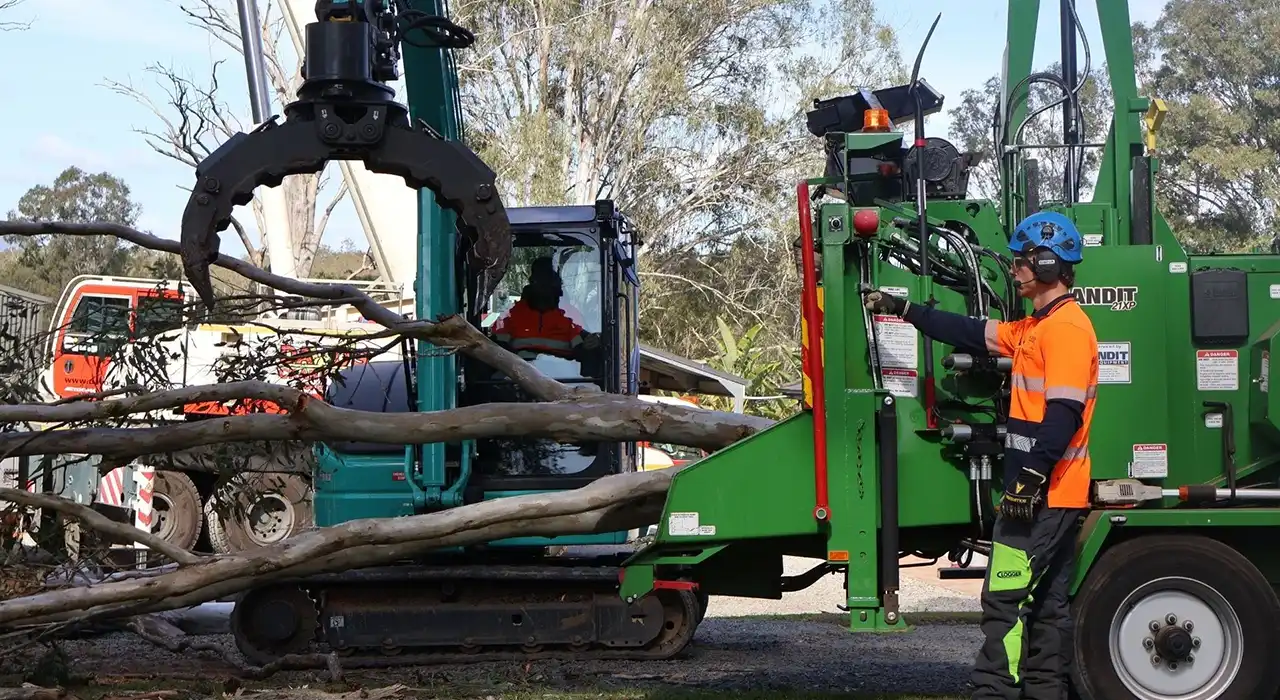
Mechanised clearing provides a more efficient and controlled approach for larger or high-risk sites. Equipment such as tree handlers allows for safer handling of large vegetation and improves productivity. For projects requiring high-capacity operations, mechanised solutions such as those outlined in mechanised tree removal services are often the preferred option.
Sequencing Clearing With Survey, Earthworks and Utilities
Land clearing should be carefully sequenced with other project activities to avoid rework and delays. Survey works typically define clearing boundaries and must be completed before vegetation removal begins. This ensures compliance with approved plans and avoids clearing outside permitted areas.
Clearing is often staged alongside earthworks and service installation. Coordinating these activities improves efficiency and reduces double-handling of materials. On larger projects, integration with broader civil services ensures that clearing aligns with construction timelines and contractor workflows.
Required WHS Documentation and Environmental Plans
Workplace health and safety (WHS) requirements play a central role in land clearing operations. Contractors must prepare risk assessments, safe work method statements (SWMS), and traffic management plans where applicable. These documents ensure that risks are identified and controlled before work begins.
Environmental management plans are also required to address erosion control, sediment management, and vegetation protection. A well-prepared vegetation management plan on the Gold Coast helps ensure compliance with development conditions while maintaining environmental standards. Proper documentation supports both regulatory approval and safe project delivery.
Land Clearing Planning Checklist
A structured land clearing checklist helps ensure that all requirements are addressed before work begins:
- Confirm vegetation clearing approvals and applicable codes
- Review legislative obligations under Queensland regulations
- Complete site investigation and identify constraints
- Locate and mark underground services
- Select appropriate clearing methodology (manual or mechanised)
- Define clearing boundaries based on survey data
- Prepare WHS documentation and environmental management plans
- Sequence clearing with earthworks and utility installation
- Plan waste handling and material management
- Engage a qualified contractor for delivery
For projects requiring reliable execution, professional land clearing services support compliance, safety, and program alignment.
Request a Land Clearing Program and Quote
Effective planning reduces risk and improves project outcomes. Whether you are managing a subdivision, infrastructure upgrade, or commercial development, having a clear land clearing checklist ensures that every stage is properly coordinated.
To discuss your project, request a tailored clearing program, or obtain a detailed quote, contact NexGen Tree Services via our contact page. Learn more about our experience and capabilities on our About page.
